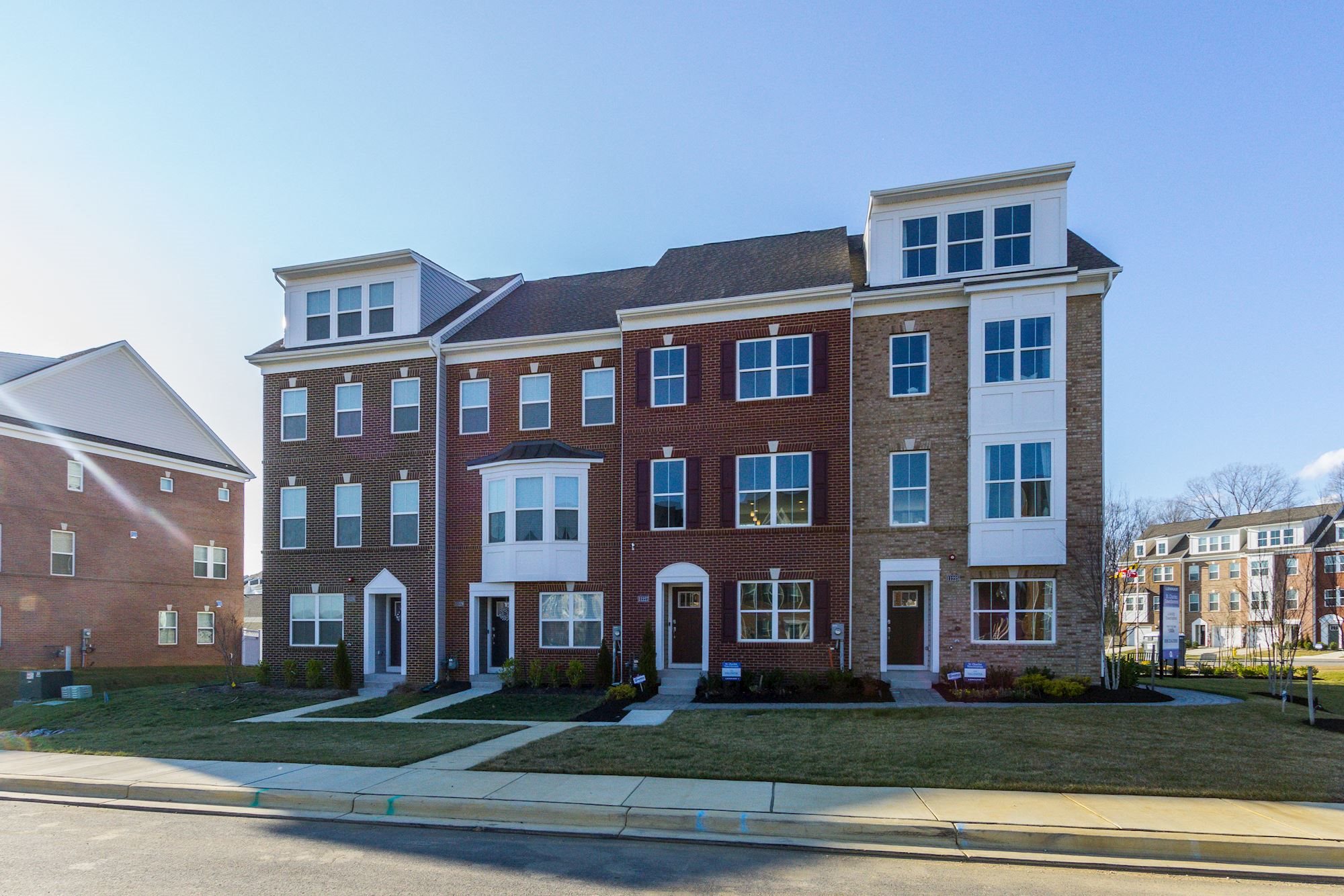
Zillow: Buying Beats Renting In 64% Of Metros After 3 Years

May 17, 2013

in News

Zillow: Buying Beats Renting In 64% Of Metros After 3 Years

Buying a home is more affordable than renting in nearly two-thirds of metros after three years of paying for a mortgage, according to Zillow. For its calculation, Zillow considered costs associated with buying and renting, such as upfront payments, closing costs, insurance, utilities, and maintenance. Then, the online marketplace looked at historic and anticipated home value appreciation rates, rental prices, and rental appreciation rates to determine how many years would need to pass before buying becomes less expensive than renting. According to Zillow, in 64 percent of U.S. metros, buying is more affordable than renting if homebuyers plan to stay in their home for at least three years. “Locally high home value appreciation in many areas, combined with historically low mortgage rates and low home prices relative to recent peaks, has made buying a home a more advantageous financial decision than renting for many would-be buyers,” said Dr. Stan Humphries, Zillow’s chief economist. [Read this article]

Share:

    { 0 comments }

    May Consumer Sentiment Highest In Nearly Six Years

    May 17, 2013

    in News

    May Consumer Sentiment Highest In Nearly Six Years

    Consumer sentiment rebounded in early May to the highest level in nearly six years, an encouraging sign after recent data that has suggested economic growth is cooling. A gauge of future economic activity released on Friday also suggested the expected slowdown would be temporary, with the index rising to a near five-year high in April. Economists expect growth will likely slow in the second quarter from the 2.5 percent pace at the beginning of the year as tighter fiscal policy starts to bite. But recent stronger than expected improvement in several areas, including the labor market and retail sales, has suggested the recovery remains resilient. “We’re still definitely on the recovery path. We expect that this is going to be a very long and gradual recovery,” said Scott Brown, chief economist at Raymond James in St. Petersburg, Florida. “Most economists are looking for stronger growth in the second half of the year and into next year.” [Read this article]

    Share:

      { 0 comments }

      Leading Indicators Index In U.S. Rises More Than Forecast

      May 17, 2013

      in News

      Leading Indicators Index In U.S. Rises More Than Forecast

      The index of U.S. leading indicators climbed in April, a rebound from March that suggests the world’s largest economy will accelerate later this year. The Conference Board’s gauge of the outlook for the next three to six months climbed 0.6 percent in April after falling a revised 0.2 percent in March that was steeper than previously reported. Advancing stock prices and a recovering housing market may be propping up household spending, which accounts for about 70 percent of the economy. “We’re still definitely on the recovery path, but we anticipated all along that this is going to be a very gradual recovery,” said Scott Brown, chief economist at Raymond James & Associates Inc. He said multiple factors could drive economic improvement going forward. “It’s typically a lot of little things getting better at the same time. You get a little more job growth, a little more consumer spending, bank credit eases up a little more,” according to Brown. [Read this article]

      Share:

        { 0 comments }

        Unemployment Falls In 40 U.S. States, Rises In 3

        May 17, 2013

        in News

        Unemployment Falls In 40 U.S. States, Rises In 3

        Solid hiring helped lower unemployment rates in 40 U.S. states last month, the most since November. The declines show the job market is improving throughout most of the country. The Labor Department said that unemployment rates increased in only three states: Louisiana, Tennessee and North Dakota. Rates were unchanged in seven states. California, New York and South Carolina all reported the largest unemployment rate declines in April. Each state’s rate fell by 0.4 percentage points. The report said 30 states added jobs in April, while 18 reported fewer jobs. Nationwide, employers added 165,000 jobs in April and the unemployment rate fell to a four-year low of 7.5 percent. The economy has added an average of 208,000 jobs a month since November. The housing recovery is creating jobs in many states. Texas has created 41,500 construction jobs in the past year. That’s helped the state be the nation’s leader in job growth over the past year and in April. The state added 33,100 jobs last month and 326,100 jobs over the past 12 months. [Read this article]

        Share:

          { 0 comments }

          10 Easy Ways To Save For A Down Payment

          May 17, 2013

          in Tips

          10 Easy Ways To Save For A Down Payment

          The down payment is often the toughest hurdle to clear when buying a home. Whether your goal is $5,000 or $50,000, consider these 10 simple ways to save for your down payment. For example, try to negotiate your rent. With rent likely near the top of your list of expenses, cutting its cost can help you sock away serious savings. If you’re a good tenant, approach your landlord about lowering your rent. If that doesn’t work, consider downsizing to a smaller, cheaper apartment, and put the money you save on rent directly into savings. Also, shop around to reduce major monthly expenses. If it’s been a while since you checked rates for your car insurance, renter’s insurance, health insurance, cable, Internet or cell phone plan, now is the time to look into those costs. You may be able to save hundreds or even thousands of dollars by making alterations to some of these contracts. [Read this article]

          Share:

            { 0 comments }

            Freddie Mac: Housing Is The Economic Recovery’s ‘Juice’

            May 17, 2013

            in News

            Freddie Mac: Housing Is The Economic Recovery's 'Juice'

            The “juice” that will fuel the economic recovery is housing, or more specifically, new home sales, Freddie Mac stated in its economic and housing market outlook report for May. Although the unemployment rate has been decreasing, falling to 6.5 percent in April, the GSE explained the reduction is due to a decline in the labor force participation rate, not an increase in employment. According to Freddie Mac, the labor force participation rate, which remained at 63 percent in April, was at the lowest level since 1980. However, as the building of new homes adds to the availability of jobs, the unemployment rate should inch down. “Based on historical correlations, every additional 100 thousand housing units started brings down the unemployment rate for construction workers by about three-fourths of a percentage point,” the report stated. For 2013, Freddie Mac forecasts housing starts will increase by 200,000 units, which would support over 100,000 new jobs in construction. Adding to this are the additional households that will form. [Read this article]

            Share:

              { 0 comments }

              7 Secrets Your Credit Report Won’t Reveal

              May 17, 2013

              in Tips

              7 Secrets Your Credit Report Won't Reveal

              Do you feel like your credit report is spying on you? Sometimes it seems like just about everything personal is included in your credit history, including your name, address and Social Security number. Even your birth date is on it. But you still have a few secrets even your credit report doesn’t know. Here are seven items that lenders won’t see when they pull your credit report. For example: your spouse’s credit history. Contrary to popular belief, marriage doesn’t result in one joint credit file for both parties. When someone pulls your credit, whether you’re married or not, the lender will see only your individual credit history, along with the debts and accounts with your name on them. Some of those obligations may show that you’re a joint account holder, co-signer or authorized user on certain accounts. However, your report won’t show the names of the other people on those accounts, or your relationships to them. [Read this article]

              Share:

                { 0 comments }

                Is Generation Y a ‘Game Changer’ For Housing?

                May 17, 2013

                in News

                Is Generation Y a ‘Game Changer’ For Housing?

                Many housing observers agree that Generation Y – people from 18 to 34 years of age – largely prefers downtown living, often in rental apartments with easy access to walkable neighborhoods and public transportation. The real question is whether they’ll outgrow those tastes once they earn higher salaries and have kids. The Urban Land Institute, or ULI, the land-use association that long has championed dense development over sprawl, this week plans to release the results of a survey of generational housing preferences, highlighting those of Generation Y. ULI heralds Generation Y, with nearly 80 million members, as a potential “game changer” in the U.S. real estate market (they are also known as “Millennials”). Of survey respondents in that age range, 59% said they prefer their neighborhood to have a variety of housing types; 62% favor mixed-use developments with shops, restaurants and offices; and 52% like pedestrian-friendly neighborhoods. [Read this article]

                Share:

                  { 0 comments }

                  The 10 Best Biking Cities In America

                  May 17, 2013

                  in Markets

                  The 10 Best Biking Cities In America

                  A recent international ranking of the world’s best cities for biking didn’t shower North America with plaudits. Only one city – Montreal – made it to the top 20. But the truth about biking in the U.S. and Canada is more complicated than that headline suggests: there are some really nice places to bike, and some, well, are best approached with caution. A new expanded ranking of bikeability from biking map service BikeScore in U.S. cities gives a sense of the contrasts. Bike Score uses four criteria, weighted equally: the availability of infrastructure like bike lanes, hilliness, route options, and the level of commuting. Among cities with more than 500,000 people, at the top were Portland, San Francisco, Denver, Philadelphia, Boston, Washington D.C., Seattle, Tucson, New York and Chicago. The city heat maps show the most bikeable areas in green, with the least bikeable in dark red. [Read this article]

                  Share:

                    { 0 comments }

                    The States That Use The Most Green Energy

                    May 17, 2013

                    in Green Living

                    The States That Use The Most Green Energy

                    California and Texas might be leading the nation’s rollout of solar and wind power, respectively, but Washington, where hydroelectric dams provide over 60 percent of the state’s energy, was the country’s biggest user of renewable power in 2011, according to new statistics released by the federal Energy Information Administration. Hydro continued to be the overwhelmingly dominant source of renewable power consumed nationwide, accounting for 67 percent of the total, followed by wind with 25 percent, geothermal with 4.5 percent, and solar with 3.5 percent. The new EIA data is the latest official snapshot of how states nationwide make use of renewable power, from industrial-scale generation to rooftop solar panels, and reveals an incredible gulf between leaders like Washington, California, and Oregon, and states like Rhode Island and Mississippi that use hardly any. The gap is partly explained by the relative size of states’ energy markets, but not entirely: Washington uses less power overall than New York, for example, but far outstrips it on renewables. [Read this article]

                    Share:

                      { 0 comments }